Edition of two Psalm Settings by Francisco Martins
There is now available the edition I prepared for the Polyphonia series of Edições MPMP comprising two psalm settings by Portuguese composer Francisco Martins (c.1617-1680).

There is now available the edition I prepared for the Polyphonia series of Edições MPMP comprising two psalm settings by Portuguese composer Francisco Martins (c.1617-1680).
An edition of three motets for Advent by Francisco José Perdigão, a late-eighteenth-century chapel master of Évora Cathedral, that I prepared for the Sacra XVIII series of the Editions MPMP (it will be published in early-2019 and will be available …
Motets for Advent performed by Grupo Vocal Olisipo Read more »
Fr. Pedro de Cristo (his secular name being Domingos) was a friar at the Augustinian monastery of Santa Cruz in Coimbra. He was probably born around 1550 and died on December 12th, 1618.
This is another episode of the project Early Music Sources. This episode is dedicated to the Romanesca, one of the most widely known bass sequences in the sixteenth and seventeenth centuries.
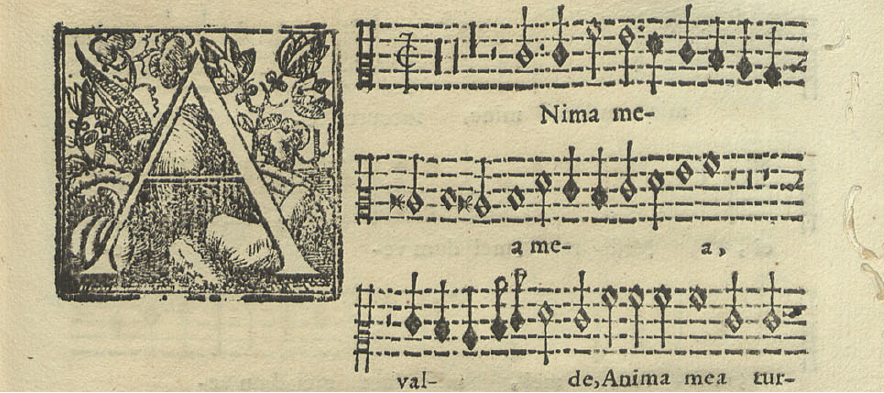
In 2014 I transcribed the two surviving parts – the altus secundus and the bassus – of Portuguese King D. João IV’s 6-voice motet Anima mea turbata est as an exercise in order to understand if it was possible to reconstruct the remaining four voices from …
Another video of the project Early Music Sources comprises the musical analysis of Cipriano de Rore’s madrigal Amor ben mi credevo.
The Barca di Venezia per Padova (The Boat from Venice to Padua) by Adriano Banchieri is a set of what we can call comedy madrigals for five voices (SSATB) which is basically a boat journey from Venice to Padua during which several …
One of the first editions I prepared for the Polyphonia series of the Editions MPMP in late 2012 was the collection of responsories for Christmas matins by composer Estêvão Lopes Morago which make the number 6 of this series.
The motet Veni Domine by Spanish composer Francisco Guerrero is, in my opinion, one of his finest works. The text “Veni Domine et noli tardare” was set to polyphony by numerous Spanish composers: Cristóbal de Morales (with 2 settings), Juan Esquível, and …
Gregorio Allegri’s (c.1582-1652) Miserere, mei Deus is without any doubt the most mystical work of sacred vocal polyphony of the Catholic world for its association with the musical practices in the Sistine Chapel. Together with Palestrina’s Missa Papae Marcelli it …